Facebook Author Page


Wednesday, 21 February 2018

I've Moved House!

https://christinahollisbooks.online
Find out more at https://christinahollisbooks.online
After seven and a half years of blogging here on Blogger, I've now upped sticks and moved over to the Wordpress platform. 

There's a new feel to my blog there, reflecting my love of growing (and cooking) good food, and writing about it. These are all things that save me time, money, and keep me sane. That's reflected in the tagline for my new blog—Writing, Growing and Saving.

It's been lovely meeting you here, and I hope you'll update your links and bookmarks to follow me on my new blog. The address is https://christinahollisbooks.online Drop in for a look round. It's still a work in progress so if you've got any bright ideas, I'd love to hear them! 

You can find my new site here 

Monday, 5 February 2018

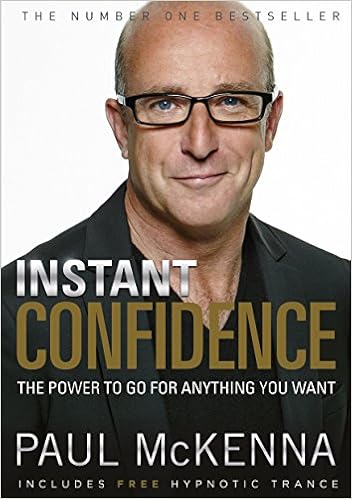
Review: 'Instant Confidence' by Paul McKenna

Writing is my dream job, and has been from the moment I could hold a pencil. When I discovered I could spend hours shut away on my own thinking about stuff, writing some of it down AND getting paid, without having to do any of that scary human interaction stuff involved in retail (my mother and sister's speciality) or tricky computing calculations (like OH) I threw myself into my career.

That was fine in the days of posting manuscripts out to magazines, agents and publishers. The cycle of sending new work out every week and getting cheques, acceptance letters or rejections in the post was leisurely, and anonymous.

Things have changed. The old publishing model has gone forever. There's so much on offer online for free, writers must become a brand. We have to sell ourselves as well as our work if we're to have a hope of making a living. I've been struggling when it comes to self-promotion.  When I saw a book called Instant Confidence mentioned online on the same day I got a £5 credit from Amazon, I wondered if it could help.

Instant Confidence is a book and hypnotic trance system (yes, I was highly sceptical, too) by Paul McKenna. It  is subtitled The Power To Go For Anything You Want. It was also on offer, reduced from £12.99 to £9.99. With my Amazon credit bringing it down to the positively tiny price of £4.99, I took a gamble. 

I've never seen any of McKenna's TV appearances so I had no idea what to expect. You listen to a 30 minute audio download each day, then read the accompanying book. I listened to the audio every morning before I got out of bed. It's very relaxing and at first I was worried I'd go back to sleep, but that never happened. McKenna wakes you up at the end, in any case. His voice is pleasant, persuasive—and here's the really clever thing—what he says is simple common sense. It's the kind of thing most people put into practice every day.  McKenna's skill lies in peeling back all the layers of uncertainty, misapprehension and self-doubt that stop people like me having a fun time all the time, like the rest of you.

I read the accompanying book each evening, working through the exercises. Although I finished the book within days,  I carried on with the CD for nearly a month. The reason I stopped when I did was because of what happened when I read a business email one morning. It involved some photographs I'd taken years ago, when I was writing non-fiction for magazines. I was asked to contact the magazine, and get some information from them.

Until I read Instant Confidence, I'd have spent a day or two agonising about whether the publication that printed the photos would remember me, then I'd have drafted a detailed email, before deciding the query would be better explained over the phone. That would start me worrying I'd be interrupting them, and they'd be annoyed at having to pay me more money. I'd then write out a script of what I would say, for fear of taking up too much of their time and making mistakes. And I'd have put off the awful moment of actually talking to them for as long as I could. 

This time, I picked up the phone straight away. The amount of time between me reading the initial email, and picking up the phone to get the information was about a minute. I didn't think twice about taking action. That would never have happened in my pre-Instant Confidence days. The conversation I had with the editor on the other end of the line was so relaxed, I found myself pitching for more freelance work, and this was after a decade away from that side of the writing business. From discovering a problem to grabbing a job opportunity in under ten minutes is a record for me.


https://images-na.ssl-images-amazon.com/images/I/51xibii35pL._SX350_BO1,204,203,200_.jpg
The Instant Confidence system hasn't only worked well for me in a business setting. Until last week, I always chose the same lunch option at every meeting of the Romantic Novelists' Association's Marcher Group. I'd had quiche and salad every time, from the first meeting I attended. I definitely love quiche and salad (and our venue, the Courtyard in Hereford offers a delicious variety of both), but it's also true it was my default option. I felt uncomfortable with the idea of trying something new—until I read Instant Confidence. When the waiter arrived at our table last week with fish pie for me, the regulars thought there had been a mistake. We all laughed.  

That doesn't sound like much of an anecdote, but only a few weeks ago I would have stuck with my usual option, and the thought of people laughing at any decision I'd made (no matter how minor) would have crippled me with embarrassment. The fish pie was delicious, by the way. Will I have it again next time? I don't know. It depends what else is on the menu—and I wouldn't have said that before reading Instant Confidence!

It's obvious this book and CD approach really worked for me. It may not work for you, especially if (like my son) you relax so well you sleep through McKenna's wake-up call. It definitely won't work unless you can suspend your initial disbelief (my sceptical OH didn't manage that). However, as OH has never lacked self-confidence, he wasn't the target audience.

I do have a couple of reservations about Instant Confidence. £12.99 is a high price to pay for a book with so many blank pages, and very large type. At a rough estimate, I'd say it only runs to 20-30,000 words. If you can't get this book at a discount, only you can decide whether increasing your self-confidence and self-esteem is worth £12.99. I would never have bought this system at full price, but within weeks of shelling out that £4.99, I've obtained some spectacular results. It would have been a good investment for me, even at the recommended retail price. 

My other point concerns the whole Paul McKenna oeuvre.  He is a very clever man, who has capitalised on his skill to produce a range of self-hypnosis systems. Good for him—although I suspect many of the things he says in the hypnotic trance for Instant Confidence could be easily tweaked to create hypnotic trances for all the other subjects he covers.  

Flushed with success after tackling Instant Confidence, I'm going to try another of McKenna's book-and-trance combinations. I'll be posting about my progress on here, and on my facebook author page at http://bit.ly/FacebookAuthorPageCH . Follow me, and like my page to find out what happens...


Monday, 8 January 2018

In the Bleak Midwinter...

A young oak tree came down across our track
I hope you had a good Christmas and New Year! It was quiet here at Tottering Towers. The only excitement was a heavy fall of snow. It brought down lots of branches in the wood. One fell onto the electricity cable supplying us, and some other houses on our hillside. It snapped with a huge bang at 4am, waking everyone. While we were all in darkness, the night outside was filled with sparks from the arcing electricity cable. It was quite scary for a while. 
We cook with electricity and it powers our gas central heating, so we had to find alternatives. Housework keeps you warm, but it's not very exciting. We could boil a kettle on our gas hob to make tea, and it was a good excuse to live on soup and cake!
Flares, from Pixabay
So many people were affected by the bad weather across Gloucestershire and the surrounding counties, it was 9pm that evening before we had light and heat. A brave engineer had to repair the damage while standing on top of a cherry-picker in a stiff, freezing wind. 
It's only when there's a break in the supply that we realise how lucky we are to be living at a time when life is relatively easy. Imagine you're a Victorian woman living in a city tenement. In the days before electricity, every morning is pitch black and freezing. The only sounds come from rats scrabbling beneath the bed your wheezing children share. Snow blows in under the door of your single room. Fetching all the water you need from the communal well will be a slippery job today. If your husband gives you some money, your family can eat. If not, hard luck. He’ll go to the pub. You and the children will have to go hungry. 
Women in those days had no voice, and no power. They lurked in the footnotes of history until they gained an element of control, first over their own money, later their vote and finally, their lives. Much of that progress was driven by women themselves. It took a hundred years of hard work, lobbying and violence before their lives improved to anything like today’s standards. The only way was up—and women from my old home town, Bristol, led the way. 

2018 is the centenary of the first British women getting the vote. The publisher Pen and Sword Books is producing a series of books to mark this defining moment. Each volume concentrates on one British city. My contribution covers Bristol.  Struggle and Suffrage—Women’s Lives in Bristol, 1850-1950 will be published later this year, and there will be all sorts of events to mark the centenary. To make sure you don’t miss anything, sign up for my newsletter in the boxes at the tip of this page, and follow my author page on Facebook.

Wednesday, 3 January 2018

Review: Women and The City: Bristol 1373-2000, Edited by Dr Madge Dresser


https://www.amazon.co.uk/Women-City-1373-2000-Madge-Dresser/dp/190832631X/ref=sr_1_1?ie=UTF8&qid=1514970849&sr=8-1&keywords=madge+dresser
Find out more at http://amzn.to/2Cgv5r0
Women and the City: Bristol 1373-2000 is a collection of essays by respected academics. It’s a lively, absorbing read. A good balance has been struck between well-written prose and contemporary illustrations. The book and its content is presented in a way that invites even a casual reader to keep turning the pages. There’s a handy list of abbreviations right at the front, which is much easier than having to flick through to the index, or notes, each time a set of initials pops up in the text. Other academic works would do well to follow this example.

I bought Women and the City: Bristol 1373-2000 to help with research for my own book, Struggle and Suffrage: Women’s Lives in Bristol 1850-1950, but after studying the sections relevant to my own work I went straight back to the beginning of the book and read it all. It’s a mine of information for anyone with an enquiring mind. I’d particularly recommend it to aspiring historical novelists in search of inspiration. The fact that a woman (Ann Barry) held the lease of that stronghold of “Enlightened” masculinity, the Exchange Coffee House in Corn Street offers all sorts of dramatic possibilities, for example. It’s often forgotten that Bristol women struck a significant blow in the fight against slavery. The formation of the Bristol and Clifton Ladies’ Anti-Slavery Society is never as widely reported as Bristol’s part in that terrible trade. This book helps to put that right. 

Women and the City: Bristol 1373-2000 is curated by Associate Professor of History at the University of the West of England and Fellow of the Royal Historical Society, Dr Madge Dresser. The breadth of its content and unique style of each contributor makes for a fascinating read. It offers great insight into the history of Bristol and its people. Anyone who knows the city will look at local landmarks with new eyes after reading it.  


To sum up, this is an invaluable collection for historians, and anyone interested in women’s studies. It’s also an inspiring read for the rest of us.

Monday, 1 January 2018

Season's Greetings!


I hope you've had a lovely rest over the Christmas season. Wishing you a Happy New Year, and a peaceful, productive 2018.

Monday, 27 November 2017

Mud, Mud Inglorious Mud...

Blueberry Leaves In Autumn
It's been a funny year.  It's the end of November, but I've only started heating the greenhouse in the past few days. Our cherry trees, whose leaves usually turn glorious sunset colours before dropping, are hanging on like leaden green rags. Out in the wood there's been more in the way of seasonal colour. Birch leaves are small and heart-shaped, hazel leaves deckle-edged discs. With the shortening days they've all turned bright yellow. One or two seedlings have escaped from the beech wood to light up the understorey of the conifer plantation. They make it look cheerful on the dullest day. When the sun shines, they really glow.

In the garden at Tottering Towers, the blueberry bushes always put on a great autumn show. They're the plant with everything—beautiful flowers which bees love, delicious fruit, and each November they turn fiery red, without fail. They grow best in lime-free soil and must never dry out, but as they'll grow happily in containers this isn't a problem. Mine are planted in big plastic tubs filled with ericaceous compost. They stand in trays which I keep topped up with rainwater. Unlike most plants, blueberries don't mind standing in water.

The whole countryside around here is used to wet feet. It's been drizzly for weeks, but a few days ago the weather turned stormy. Torrential rain went on for hours, only relieved by heavy showers. The River Wye is higher than it's been for months. Sliding down banks between forest tracks is like the worst episodes of cross-country running at school. With most of the leaves now off the sweet chestnuts of the bluebell wood and the ground covered with nuts, squirrels are everywhere. Alex, our retriever/labrador cross is far too slow to catch them before they spring up to safety in the trees. That doesn't stop him trying. When we reach a road on our walks I put him on the lead for safety. I have to be careful to spot the squirrels before he does, as he's prone to mad dashes. Yesterday, he saw a squirrel I didn't, leapt forward and almost yanked the lead out of my hand. Next thing I knew, I was flat on my back looking up at the sky through those last few autumn leaves. I'd lost my footing on the muddy ground, and went down splat.  Luckily this happened only a hundred yards from our house. It was a cold, wet walk home!

Tuesday, 10 October 2017

Christmas Won't Start Here Until Advent Sunday, But...

Pic #1
Phew, where has this year gone? I promised myself I'd self-publish a Christmas novella last year. It was all ready to go, then my mother fell ill. Everything else was on hold after that.

...the same can't be said for working on Christmas stories. Magazines need copy in midsummer. The biggest publishers schedule their book releases over a year ahead. Independents and self-publishers have more leeway, but Christmas books released in October can build up plenty of momentum before the Christmas-book-buying-market hits the floor on December 26th.

Since January I've been working so hard on my non-fiction project for Pen and Sword Books, Struggle and Suffrage: Women's Lives In Bristol 1850-1950, today is the first chance I've had to look up from my keyboard.

I might be able to manage a release in time for Christmas, but doing anything in a rush is never a good idea, is it? My Christmas novella Highland Hideaway is practically finished, but it still needs editing, and a cover. Both those things take time.

Pic #2
I'm still adding bits to, and amending, the final manuscript for Struggle...  so I'm concentrating on every word, dot and comma of that book at the moment.

I love the autumn It would be a relief to send Highland Hideaway away for editing, instead. Then I can take my time to find a cover design.

The top picture accompanying this blog isn't romantic, but I came across it while I was combing through Pixabay. Isn't it stunning? It reminds me of when I lived in Somerset.

Barn owls love the farmland there. We only get Tawny owls among our Gloucestershire trees.

Pic #3
The second and third photos are more suitable for a romantic novella, but they'll need some work before they're can become book covers. Highland Hideaway is about a city girl who is marooned in a blizzard with a notoriously tough and uncompromising wildlife photographer. You'll never guess what happens...although there are a few dramas, twists and turns along the way.

Which of the pictures do you think would make the better cover, and why? There's a book from my backlist on offer for a comment picked at random on 1st November!

Monday, 28 August 2017

I'll Sparkle, If It's The Last Thing I Do...

...and it nearly was!

I wrote here about the conflict of interest I suffered ahead of this year's Romantic Novelists' Association Conference in Shropshire. Two members of my local Marcher Chapter were leading sessions, but as they were both scheduled for the same time, I had to choose between them. I did think about spending half the hour in one lecture theatre then nipping across to catch the last half of the other talk, but that wouldn't have worked. I wanted to immerse myself in whole talks, not spend my time looking at my watch.

 It was impossible which session to choose, so I flipped a coin.  Joanna Maitland and Sophie Weston's  Add Sparkle to your Manuscript won. Joanna and Sophie run the popular Libertà blog, covering all things bookish.

I took my seat in the comfortable seats of the university's largest lecture room and settled down for a light-hearted canter through the English Language and how it should be used. Instead, I heard those dreaded words; "This workshop..."

Aargh! I love our Marcher Group workshops, as we work on our pieces at home, and only submit them when they're (to the eye of their creator anyway) perfect. I always avoid spontaneous workshops, where you have to whip something up on the spot for the benefit of a group of strangers. classing them with other forms of torture such as diets and editing. I didn't book this weekend away from my desk to work! This was supposed to be a holiday! Didn't Joanna and Sophie know that?

Actually, "Sparkle" wasn't like that at all. It was a fun session, encouraging us to turn a deliberately terrible made-up extract of writing into something exciting and readable.  I can't go into too many details as Joanna and Sophie use some of it on their highly successful Sparkle Days, but you can read their account of the session I attended here.  

Like all the best workshop sessions, "Sparkle" taught me as much about myself as it did about my writing. The reason I hate workshops, I discovered, is because I can't bear anyone to see my work until it's completely finished. I couldn't bear to read something out that I'd whipped up in five minutes, on command.  Completely finished, as every writer knows, is a state that no piece of writing ever achieves. However much you fiddle and fuss with it, you'll always find some new reason not to send your literary baby out into the cruel world of beta readers and reviewers.  I know I do.

Maybe if I spent less time agonising over every line, I'd get more writing done. I must force myself to attend more workshops. 

I can't believe I just wrote that last line. What's the single biggest thing that would improve your writing?


Monday, 21 August 2017

Getting Social at the RNA Conference

Getting up early on a Saturday morning has never felt better than it did during the weekend I spent at the Harper-Adams University, for the 2017 Romantic Novelists' Association Conference. . First there was the prospect of a lavish, leisurely breakfast, instead of my usual hurried snack. Better still, I didn't have to worry about preparing  it, or washing up afterwards.

If that wasn't enough of a treat, Nicola Cornick, current Chair of the RNA and Sarah Morgan, winner of the 2017 Romance Writers' of America's RITA for her long romance, Miracle on 5th Avenue, were giving a session on using social media.

Facebook has more users than any other social media platform. The finer point of it are a mystery to me. I started with a personal page, then added an author page, but I'm not sure how to get the best out of either page, if I'm honest. What are your own Facebook tips? The more you use it the better, was the message I got from this conference session.

 Twitter is the next most popular social media platform, but it only has a fraction of the followers that Facebook has. Having conversations when you're limited to 140 characters is a bit restrictive, but it can be done. Instagram is more popular with young people than Twitter, so you need to know your readership. Nicola, Sarah, and most of the audience agreed that Pinterest is nothing but a time suck. It's lovely to look at and absorbing to dip in and out of the various boards, but before you know it an hour has gone past and your word count is nil!

If you'd rather be writing than surfing the net, Nicola and Sarah's advice was to concentrate on Facebook, and maybe one other platform. Make sure you have an author Page, and use it for your writing business, in preference to your personal page.

 I came straight home after the conference, and created this Canva image to redirect people to my author page rather than my personal page. I used a picture of Alex when he was a baby, and added an invitation. It was really easy to do, and only took a few minutes. Thinking of things to add to my Facebook page every day is going to be a lot harder.

Visit my Facebook Page at http://bit.ly/FacebookAuthorPageCH, and  let me know what you'd like to see there!

Monday, 14 August 2017

A Stitch In Time

There were two sessions about using fabric as inspiration at the Romantic Novelists' Association's Conference. Carol McGrath spoke about Fabric, Embroidery and Tapestry as inspiration for historical fiction, while Elizabeth Chadwick spoke about going beyond the dressing-up box to explore daily life in times gone by. Both were very different in tone, but equally fascinating.

Elizabeth suggested immersing ourselves in the period by studying the depictions of daily life in embroideries. Fashion, musical instruments and  hunting are shown in detail, created by the people who saw all those things every day. It all helps to bring authenticity to your fiction. Then there's the potential romance contained in how the pieces were made: the lives of silk-workers, the dyers, weavers, the times in which they lived and loved, and the people for whom they worked  And that's before you've considered the object of the craftwork.

Carol McGrath recounted the story of how she had been intrigued by a figure of a woman worked into the Bayeux Tapestry. There are only three women depicted in the whole 70 metre (more than 231 feet) long embroidery showing of life before and during the Battle Of Hastings in 1066. Carol has woven a series of books around the possibility of them being Harold's intended queen, his sister, and his "handfasted wife", who is shown fleeing with Harold's son from their burning house. It was a brilliant idea for a series, and the novels make compelling reading.

I'd love to be able to create a piece of beautiful needlework, but I don't have the time, the patience, or the skill. Do you do enjoy craft work? What craft are you most proud of completing?

Monday, 7 August 2017

Agents, and How To Find Them...

Felicity Trew. Photograph by John Jackson.
The first session I went to at the Romantic Novelists' Association's Conference this year was Felicity Trew's presentation about the work of an agent and how to write the perfect submission letter. Felicity works for the Caroline Sheldon Literary Agency.

A good agent will be your supporter, cheerleader and confidante. They will create a publishing schedule for you, spacing your books out so you aren't releasing them too close together. They'll guide your career, and help you create a "brand", or rework one that isn't working

When it comes to writing your submission letter to an agent, keep it calm and professional.  Begin with the word count, and the intended audience for your book. Bring all your skill as a storyteller into play, but keep all the information you include concise and relevant. Distil your plot into about three lines, and put this at the top so your prospective agent knows what to expect. Show that you've really researched your agent, and your market. Give a brief history of your writing history, and your inspiration behind the book you're pitching. Give links to your online presence. Keep your spell checker on, and make sure your letter is as perfectly laid out as your manuscript.

Which do you find harder—writing fiction, or writing the letter that goes with it?

Monday, 31 July 2017

Going Wild In The Country— The Romantic Novelists' Association's Conference 2017

It's taken me two weeks to recover enough to write about this—yes, it was that good.

Around two hundred and fifty members of the Romantic Novelists' Association converged on the Harper-Adams University in Shropshire for three days of talks, workshops, networking and fun.

There were sessions on the role of an agent and how to write the perfect submission letter, using images from embroidery and tapestry as inspiration for historical fiction, how to make social media work for you, how to revive your backlist, how technology can help writers and many more. The Gala dinner was the social event of my year so far, and the bookstalls were packed with new titles.

I'll be posting notes here about some of the sessions I attended, so subscribe to my blog by clicking top right to catch them.

The food (one of my favourite areas of study!) during the conference was fantastic. Harper-Adams are used to catering for healthy, country appetites so we began the day with pastries, toast and toppings, a choice of about a dozen cooked items from bacon and eggs to hash browns, plus porridge, fresh fruit, yoghurt and cereals. The lunches and evening meals were all great too. The amazing gala dinner on Saturday Evening of Beef Wellington was particularly good.

The Amazing Raffle-Prize Quilt 
There was only one disappointment. Two members of my local chapter of the RNA, Joanna Maitland and Pia Fenton, were each offering sessions. They were scheduled at the same time, but in different lecture theatres. Joanna, along with Sophie Weston, showed how to add sparkle to your writing. Pia and Anna Belfrage talked about how to make Timeslip work. I wanted to go to both talks, not only to support Marcher Chapter members but because I was interested in both topics. In the end I had to toss a coin because I genuinely couldn't choose. The Sparkle session won! Luckily, Pia offered to give us a quick run-down of her session at a future Marcher meeting.

After hours, the campus came alive with people socialising at the students' bar, The Welly Boot. It's a great opportunity to meet up with old friends and make new ones. I'm very shy and find socialising difficult, so I spent every evening in my room writing up my notes. I'd been a member of the RNA for years before Ann Ankers persuaded me to attend my first conference, which I did on a single-day ticket in 2014.  I was hooked from the minute I arrived. Everyone is so friendly. For every conference since then I've been one of the first to arrive, and almost the last to leave!

I enjoyed every minute of The Romantic Novelists' Association's Conference 2017, and got 110% out of my attendance.  There's no doubt I could have made it 200%, if I'd spent more time socialising after hours.

I've made a resolution ahead of #RNAconf2018 to join in more of the fun, and spend less time writing up my notes. Why not join the RNA, then you can hold me to my resolution!

Monday, 24 July 2017

Too Much Of A Good Thing!

A pre-natal courgette!
Back in the spring, I had a gardening disaster. Not one of the four courgette (otherwise known as zucchini) seeds I sowed came up. We all love chocolate courgette cake, so disaster loomed. There were four more seeds left in the packet I'd used, so I sowed them. Then I bought a new packet and sowed four more seeds just in case. Of course, all eight germinated!

When that happens, you're supposed to save the best plants and throw the rest on the compost heap. I couldn't bear to do that. Keeping all those seedlings was a dangerous move.  I usually grow only three plants each year. When they get the hang of producing courgettes I have trouble keeping up with the harvest. At least one hides under those big, beautiful leaves until it's grown to marrow size.

Yesterday, I picked the first courgettes of the season. The plants are bright with dozens of flowers, so there will be plenty more to come. I've been gathering recipes in advance, so it was time to try the first one. The weather was so wet and miserable, I made courgette and cheese soup. Luckily, it was lovely. Given the poor summer weather and the prospect of wheelbarrows of courgettes to come, we could be enjoying it several times a week!

I always make soup in large quantities as it's cheap, easy, most sorts will freeze, and this one is just as good to eat next day. Making two meals at one time is a great time-saver, too.

COURGETTE (ZUCCHINI) AND CHEESE SOUP—serves four, twice.

3 tablespoons olive oil
6-8 courgettes (zucchini) unpeeled, but washed, dried and cut into big chunks.
2 cloves of garlic, crushed
1 litre of vegetable or chicken stock
5oz/150 grammes of cheese- I use whatever's in the fridge. Feta or blue cheese are both good.
A handful of fresh green herbs, chopped finely. I used mint and chives.

Heat the oil in a large, deep pan. Add the courgettes and garlic. Stir, then cook over a medium heat until everything is soft and beginning to colour.

Pour in the stock, then simmer for five minutes.

Cube or crumble the cheese, according to texture, and add to the soup along with the chopped herbs. Stir over a low heat until the cheese is almost melted.

Remove from the heat, blend, check seasoning and serve.

In a perfect world,  each bowl of soup would be topped with a swirl of cream and a pinch of chopped fresh herbs reserved from the ones that went into the mixture. We didn't have any cream to add last night, and I forgot to keep back any herbs for decoration but the soup tasted delicious all the same!


Monday, 10 July 2017

Fruit and Fibre

I've been so busy with my non fiction project, the time has slipped by and I haven't had a chance to post any blogs here for ages. One day has melded into the next and before I knew it, here we are: the week of the RNA conference. Getting ready to leave the family to fend for themselves for four days means even less time for non-writing work.

I've been trying out some new recipes to make sure there are plenty of nibbles in store while I'm away. Neolithic bread was the first thing on the menu. Einkorn flour is what kept the builders of Stonehenge going. Einkorn is a primitive grain that doesn't have much gluten, so it's made into a no-knead bread which needs a delicate touch. The texture is almost like cake, as the dough can't support air holes, and the taste is wonderful—helped by our home-produced sweet chestnut honey! It goes very well with Cheddar cheese. Here's the recipe I used: http://livesimply.me/2016/08/30/how-to-make-einkorn-bread/.

Fired by the idea of hunter gathering, we finally remembered to take a container with us to collect wild raspberries on today's dog-walking expedition. We walked a mile and a half, searching all the way, and this is our haul. I think we need a smaller bag!


Monday, 19 June 2017

The Good Old, Bad Old Days...

It's easy to imagine that all Victorian women did was needlepoint until either consumption or childbirth carried them off. That's not true. Frances Prideaux is an example to us all, as I discovered during research for the Pen and Sword book Women's Lives in Bristol, 1850-1950, which is due for publication next year. 

Frances Helen Prideaux, M.B, B.S. Lond. and Licentiate of the King and Queen's College of Physicians is a fantastic role model for all women. When she was at the height of her powers in 1885, she was a phenomenon. 

At a time when schooling for girls was often seen as a waste of money, Frances had the best possible start in life. She was born into a family living in Clifton, which is an affluent part of Bristol. Bright and inquisitive, her potential was spotted straight away. In an age when women were treated like children and seen as chattels, Frances had the twin benefits of high intelligence and a support network few other women could boast, even today. She sailed through her education getting top grades, and took medical school in her stride. 

Frances had the work ethic of Noel Fitzpatrick, TV's Supervet. She was always busy, and in the rare moments she wasn't working, she was thinking about work. No job was too difficult for her. As a student, and then Professor Scholar at Queen's College between 1869-73, she was respected and liked by everyone. In 1884, she gained honours in obstetric medicine, and was placed third in the list of candidates at the examination for Bachelor of Medicine.  There's no doubt she would have gone on to even greater things, but she died at a tragically early age.

Photo by Frederick Hollyer,
by courtesy Wellcome Library
In October 1885 she was elected House Surgeon to the Paddington Green Hospital, and started work on November 2nd. On Saturday 21st, she woke up with what she thought was only a sore throat. She went into work and insisted on carrying out all her duties as normal, but she obviously wasn't well. By Monday 23rd, exactly four weeks after she'd started her new job, her condition made one of the senior surgeons at the hospital think she might have diptheria. 

Despite her protests, Frances was sent home from work. Where she could have contracted the disease was a mystery, as there were no known cases in the Paddington Green area at the time. These days, vaccination programmes reduce the incidence of diptheria to a few thousand cases per year worldwide, but in 1885 it was widespread. The glands in your neck swell up to a massive size, while a thick grey membrane blocks your throat, making breathing and swallowing almost impossible. Today, sufferers are put in isolation,  then given the miracle cures of antibiotics and anti-toxins. In the nineteenth century, those vital drugs didn't exist. 

A team of medical experts did everything they could to save Frances, including a laryngotomy to enable her to breathe. Despite their best care, she died within a week, "after terrible suffering". It was Advent Sunday, and the day before her final medical exams.  

The doctors who tended Frances were devastated, especially as she was fully aware of what was happening almost to the end. Despite barbaric-sounding treatments such applying corrosive lotions to her already inflamed throat, she stayed calm and brave. A glowing obituary was published in the British Medical Journal on 8th December, 1885, and a scholarship in connection with the London School of Medicine founded in her memory.

This is part of a longer piece on Frances which appears in Women's Lives in Bristol, 1850-1950, to be published in 2018. To find out more, follow this blog using the button above.

Monday, 12 June 2017

From Slaves To Sisterhood—Women's Lives In Bristol, 1850-1950

Last Friday morning, I did a couple of hours work on my computer, then drove Son Number One twenty miles to his consultant's appointment at the hospital. After collecting a bag full of free prescriptions, we came home. He went up to his room to do some private study before his exams, while I went back to work on my current work-in-progress. 

None of that would have been possible in the period covered by my current project for Pen and Sword Books, Women's Lives In Bristol, 1850-1950. I would still be living in the house where I was born—assuming I'd survived the birth of my first child. Without the miracle of medication taken for various health problems since then, I wouldn't have lasted beyond the age of thirty-five. 

The internet, personal transport, antibiotics and many other innovations have changed everyday life so much. Things we take for granted would seem miraculous a hundred years ago. Only a decent lifespan before that, Bristol was famously thriving on the three S’s—Slaves, Smoking and Sugar. Back then those evils weren't recognised as such,  but revolution was in the air. 

When campaigners against the slave trade, including Bristol women Hannah More and Mary Carpenter, inspired the Slavery Abolition Act of 1833, it knocked out one cornerstone of the city's economy. 

The Industrial Revolution came to the rescue. Bristol stopped relying on men and women toiling at piece-work in their own homes, and became an industry-driven metropolis. The Kennet and Avon canal brought in raw materials that weren't as exotic as tobacco and sugar, but could be turned into products everyone needed, rather than luxuries. The mechanised manufacture of paper, textiles and soap demanded a huge workforce. Large factories sprang up all along the River Avon from St Philip’s Marsh to Bedminster and beyond, employing the latest technology. The smaller, more nimble fingers of women made them the first choice for jobs needing accuracy and speed on production lines and in operating machinery.  

Life in Bristol improved—at least for some. A steady stream of  employable labour abandoning poorly-paid seasonal work on the farm came looking for steady, indoor jobs in factories. They settled in the cheapest lodgings. These were damp, disease-ridden courts bordering the River Avon far below the heights of the rich, beautiful Clifton area. Boats heading out from Cork, filled with families   escaping the Irish Potato Famine made the Port of Bristol their first destination. Desperate people make cheap employees. Desperate women and their children are the cheapest labour of all. 

Religion came to the rescue of nineteenth-century Bristol. The pioneering Methodist John Wesley’s mission in the city made it a magnet for non-conformists. Like their Anglican contemporaries, Methodist women were subordinate to men, although they were encouraged to take a much more active role in worship. They spread the word, supported the life of their church and played leading roles in education. They were vital to the success of the Sunday School movement, knowing that where children are led, there's a chance their mothers will follow. 

Fry's—you came for the chocolate, but stayed for the social reform...
With slavery abolished, Mary Carpenter’s Unitarian background drove her to open ragged schools for the poorest of the poor. Later, she created reformatories to train offenders as domestic servants. Great Quaker families such as the Frys and Sturges spent their money improving the minds and conditions of the Bristol poor. Businessmen and entrepreneurs followed the money to the city. Its multiple supply routes by road, rail and water made it easy to import raw materials, and export the finished articles. These men brought their wives and children. Many were non-conformists, who bonded with the local Methodists and Quakers to create a wide network of men and women determined to do good.

Knowledge is power. With the introduction of compulsory schooling, and the examples set by intelligent role models such as the Priestman sisters and the Sturge Sisters, Bristol women became unstoppable. Education led to ambition, and the realisation they could find a life beyond overcrowded squalor in the Pithay, or the Dings. 

United in optimistic bloody-mindedness, Bristol women fuelled Barton Hill’s Great Western Cotton Mill strike of 1889, created a major hub for suffragette activities, developed a network of cooperative societies, and helped win two world wars with their work on the Home Front. 

Individually, they were resourceful, inventive and brave. Cobbler’s daughter Mary Willcocks had a ten-week flirtation with royalty which took her all the way to America before she returned to Bristol, and the life of an honest woman. Pauper Ann Howe exposed institutionalised cruelty at the mighty Bedminster Union Workhouse. Bristol inventor Sarah Guppy showed Isambard Kingdom Brunel where he was going wrong with his initial design for the Clifton Suspension Bridge. Frail, deaf Ada Vachell worked all her life to create opportunities for those even more disabled than she was.

The women of Bristol have proved themselves unbeatable.

You can find out more about the inspiring mix of saints and sinners who have called the city their home in my forthcoming book for Pen and Sword, Women’s Lives In Bristol 1850-1950.

Follow this blog to find out more, and sign up for my occasional newsletter. You'll find a form at the top of this page.


Monday, 5 June 2017

A Rest Is As Good As A Change…

By Henriette Browne
For the last four months, I’ve been putting in hours of extra work a week while trying to write two books at the same time. 

My first job each day is to collate the research I’ve done so far for my major non-fiction project, Women Of Bristol, and add to it. All that work is done on the computer. When I need a break from the screen, I curl up with a pencil and a big refill pad of lined paper. It’s the way I like to write fiction, so that’s how the next book in my Brackenridge Series, Dead Woman Walking, is taking shape.

Last week, OH had a week’s holiday. He was going to spend it doing repairs and maintenance around Tottering Towers, but I led him astray. Apart from rain over the Bank Holiday weekend, the weather was fine and dry. It seemed such a shame to stay indoors working, so the two of us spent seven days roaming the countryside. 

Bees hard at work
As a result, I didn’t write a word all week. I can’t remember the last time that happened! Not only did I do nothing, I was guilty of doing what my old English teacher used to call doing less than nothing by distracting OH, too. I took him out to lunch a couple of times,  and persuaded him to visit the open day at Jekka McVicar’s Herb Farm with me. We visited a garden centre, which meant another lunch out for him, and some retail therapy for me. 

Delicious, and good for you, too!
I ended last week with a total word count of zero, but a dozen new plants. Our apricot crop set the seal on the week by ripening all at once. It's just a little tree, so there were only three fruits. I sneakily ate them all myself. Call it gardener’s perks! 

Today it’s back to writing work, but I love it so much there’s no danger of the post-holiday blues. I feel tons better for my break, and can’t wait to get writing again.


What’s your favourite remedy for working too hard?

Wednesday, 3 May 2017

Making A Start

Balloon Fiesta Flights Over Bristol
I love writing, and for the past few years I've been working in the soft and seductive landscape of romance. It's been a lovely and productive time for me, and you can see a full list of my published books (together with their cover art) here.

Much as I love fiction, my career started with non-fiction and to be honest, there are times when I've missed it. So when I was offered the chance to write the Bristol edition of Pen and Sword Books' Women's Lives, 1850-1950, I jumped at it. I was born in what used to be little more than a village half-way between Bristol and Bath, so this was an opportunity to go back to my roots in more ways than one.

The first thing I did toward my new project was to open a spreadsheet and start a timeline. The top row is national events. For example, I've included the censuses from March 1851 onwards, to the publication of George Orwell's 1984 in 1949. The second row of my database shows milestones in the history of Bristol between 1850-1950. The third row is notable details in the lives of Bristolian women.

Then I had a brainstorming session, listing the seven major areas of interest: education, home life, health, entertainment, working outside the home, entertainment, and finally politics and protest. The Women's Lives, 1850-1950 series will be published in 2018, to coincide with the centenary of the first women being given the vote in England.

Once I had this organised, I slotted all the information I mined from the Bristol Archives under one heading or another, cross-referenceing as I went. It's saving me a lot of time. As I was working, I met some female family historians who were kind enough to give me some anecdotes for my book. It all added up to an invaluable start to my project.

Now I have to collate all this information, and work it up into a text worthy of all these remarkable local women. Given that the years 1850-1950 was a century filled with innovation, bravery and self-sacrifice, shot through with the down-to-earth humour of Bristolians, that shouldn't be too hard.

My only problem will be what to leave out. I've got enough material for half a dozen books—not just one!

Wednesday, 8 March 2017

Setting Up With Scrivener

I wrote here about my new non-fiction project for Pen And Sword Books, Women's Lives: Women Of Bristol 1850-1950. This will involve a lot of research and will stretch out over several months, so it's vital that my work should be well-organized. 

Some people are methodical by nature. I'm not, but working with the dedicated writing package Scrivener developed by Literature and Latte makes it easy to keep track of things. Instead of having box files, ring binders filled with notes and jottings on odd bits of paper, I collect everything together in one Scrivener project. Each chapter is given its own file within this Scrivener document, and so far I've created other files within it with the main headings of Primary Sources, Secondary Sources, Contacts, interviews and Images.  Each of these is further sub-divided so in theory, nothing can get lost—unlike notes scribbled on the back of envelopes. 

Each time I come across a useful website or find a quote, I can store it in the appropriate information file. Although the manuscript pages of my Scrivener project will only accept text, video and audio links can be stored in other parts of the 
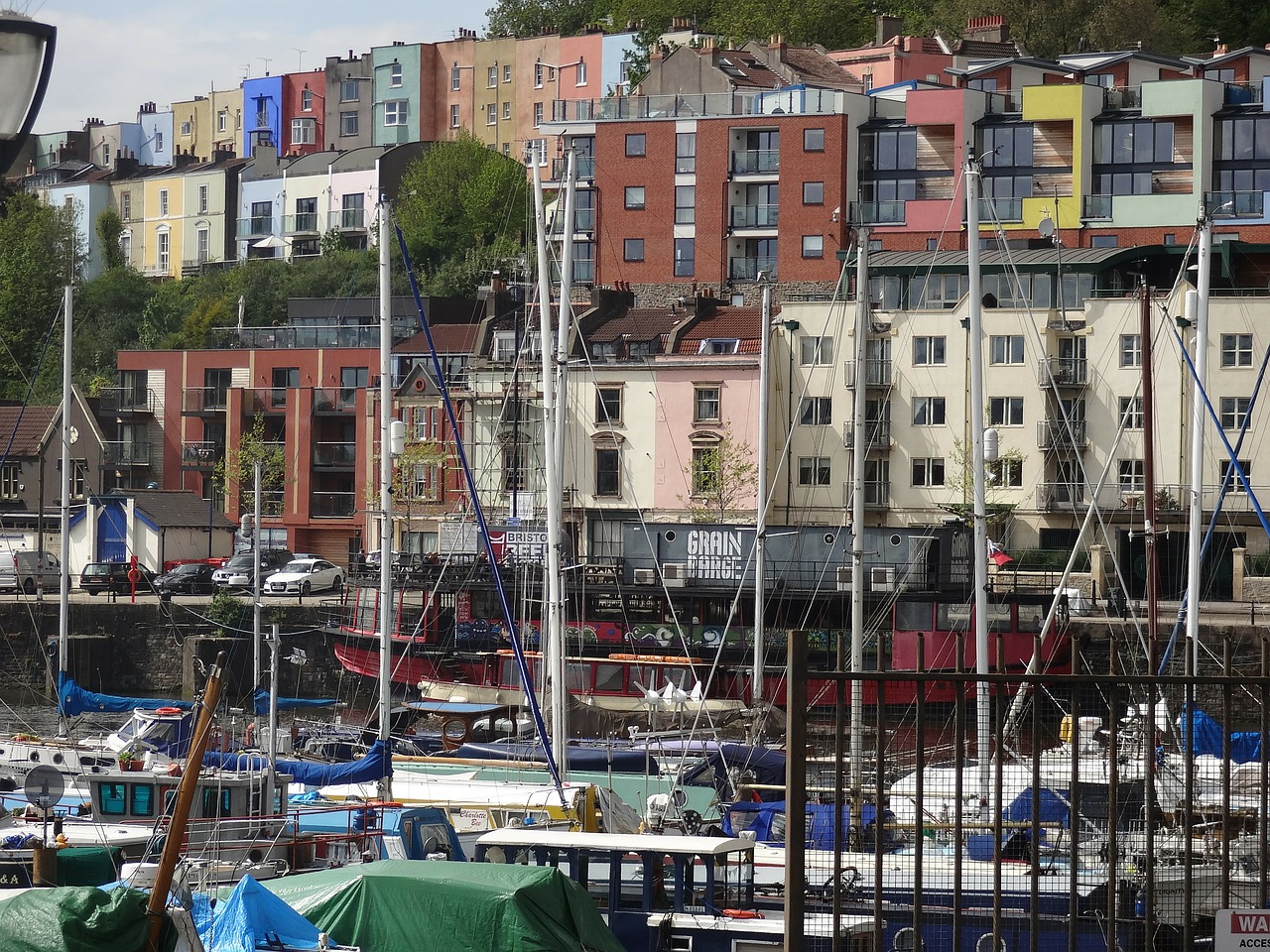
Bristol Docks

I've already got general headings for my chapters such as; Education, Work, Family Life, Health, Leisure, and Active Citizens, and I'll sub-divide these as work progresses. The big advantages of working with Scrivener is that I can summarise each chapter as a synopsis of my ideas. These can then be displayed in Scrivener's 'Corkboard' mode, in the style of index cards. There's a facility to colour-code each of these, so I can see at a glance where I am—not yet started, notes, first draft, revised draft, completed and so on. 

Scrivener has a useful split-screen mode, which comes into its own for cataloguing. While I'm writing or editing a document displayed on the top half of my computer screen, I can add sources or create an index entry on the lower half of the screen. 

You can read my top tips for working with Scrivener here

Finally, if you've got any gossip about a woman's life in pre-1950's Bristol, I'd love to hear from you! Add a comment below...